




Located in the state of Northern Territory in Australia, the Uluru Kata Tjuta National Park is one of the major representatives of this continent. The characters that make this park a unique destination range from geological to historical ones.
Discovered in 1873 by the English coloniser William Gosse, the monolith was named “Ayers Rock” in honour of the, at the time, prime minister Henry Ayers. As shortly explained in the last post, Australian history has always two, very different perspectives.
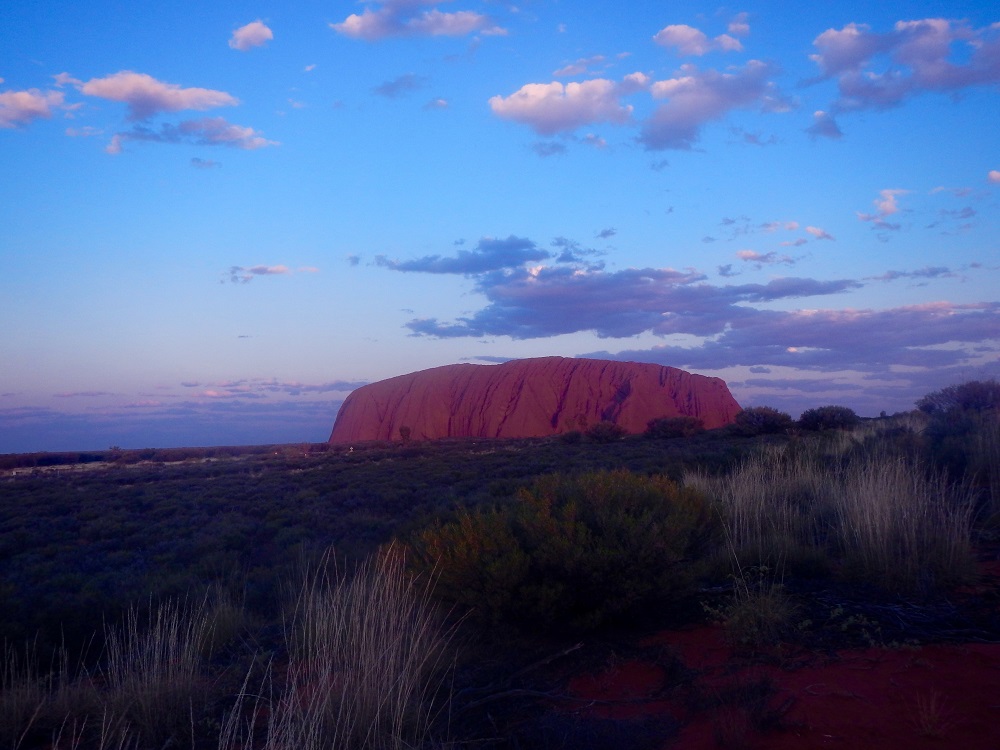
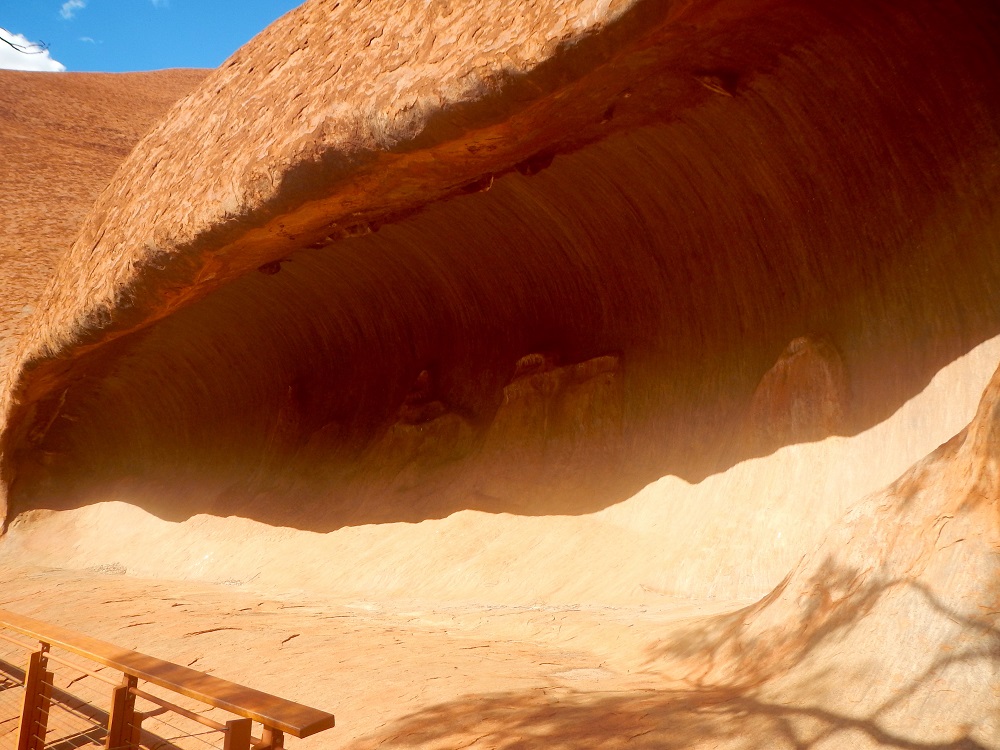
Every slit, gap, recess, streak and bump on the surface of the monolith has indeed a deep and precise significance for the indigenous populations of the area. Examples are the side patch of moisture considered the blood of the population of the poisonous snake’s population won during a famous battle during the Dream Time. The holes of a rock used to be the eyes of an enemy that died long time ago; the protuberance on one side used to be the nose of a forefather, now asleep. In addition, every cave at the base of the main rock had a specific ritual function for the aboriginals.
The characters that make this place even more unique are the “Dream Time” taking part in the aboriginal histories. The Dream Time used to be the time when the earth used to be still soft and malleable. At the time the heroes with half human and half animal bodies carried out trips and searches, drawing for future descendants the pathways which passed through the vastness of the Australian deserts. Marshes and water sources were created and discovered. The survival of the Aboriginal population that still live in the desert is highly dependant on the knowledge of places where to get the waters, along the “Dream Pathways”, which is passed between generations under the form of songs and rituals.
The Dream Time however is something more than the concept described above; its mysteries and magic are held in the head and emotions of the aboriginals themselves. The strangers can only have a very superficial look to the legends and tales. Uluru is an isolated reference point located onto the Pit-jantjatjara’s Dream Lines, the kangaroo-hare population that lives in the north, and the one of the Yan- kuntjatjara, the diamond snake population settled in the south.
In the area close to Uluru two big battles took place. Those are still alive in the songs and ceremonies of modern indigenous communities. From the meridional Dream Time regions arrived a fierce tribe part of the Poisonous Snake population with the intention of killing the diamond snake people. However, Bulari, mother and heroin of the latters’ Land, faced the strong attack by emitting a death and illness lethal cloud, defeating the invaders. The bodies of some of the defeated are still included in the different shapes of the Uluru. The survivors headed then more south with the intention to battle against other groups, but faced unfortunately the same destiny.
Also the Kangaroo-hare population that lived on the north side had to face an aggressive and hostile enemy, the evil’s dingo. The horrible beast had been evoked by some songs made by an hostile tribe that had left it free to roam after having transmitted them a savage wickedness. The members of the Kangaroo-hare tribes thanks to their ability to jump managed to run away from the beast. The footprints of that hectic retreat are still visible under the form of caves at the base of the Uluru.
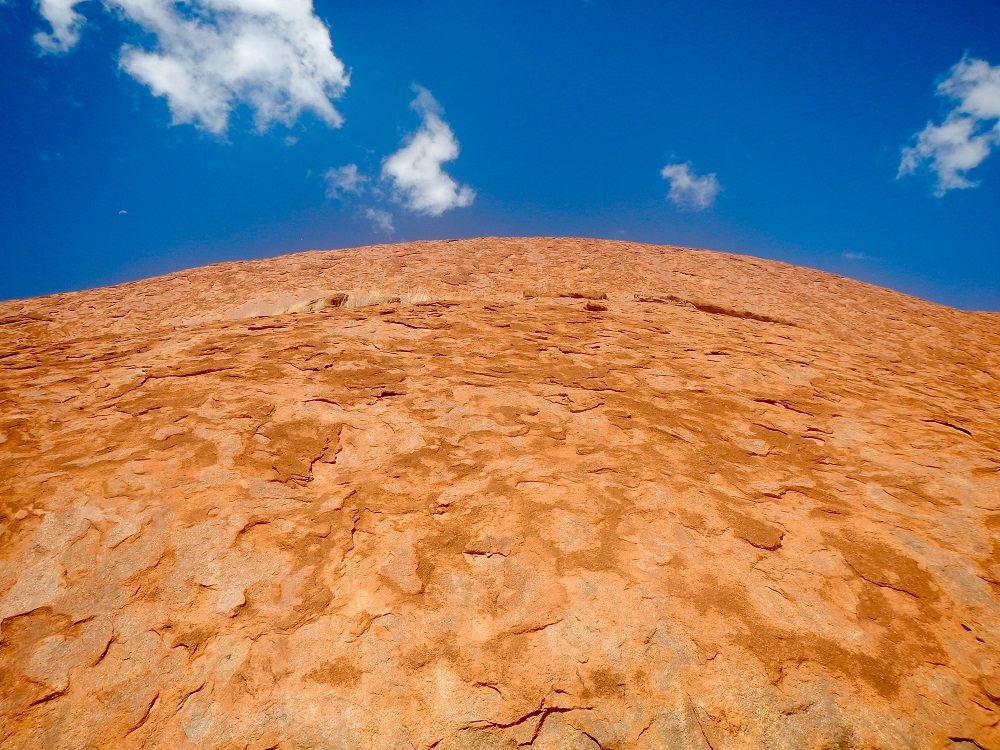
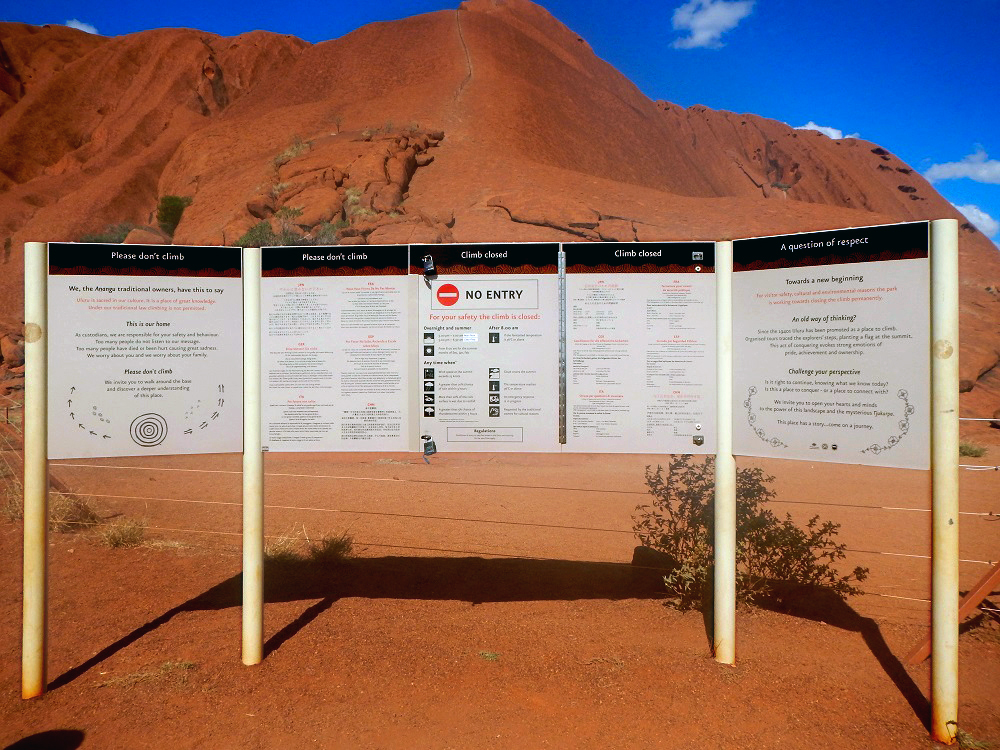
Those are the only two legends surrounding the Uluru that have been shared with external members of the community. To date, mostly in the community that has been relocated in Alice Springs, external members of the community are not welcomed. This behavior is reflecting the lack of respect that even nowadays is observable in aboriginals’ sacred places. Among those there is the hiking of the Uluru still practiced by those tourists less interested or less informed about the cultural value of the area.
riproduzione consentita con link a originale e citazione fonte: rivistanatura.com